

The “Theatre” Cards Gift Box (Chicago)
Featuring the Chicago Theatre, the Oriental, the Goodman, the Lyric Opera, Pritzker Pavilion, the Cultural Center, the Bowman, the Congress Triangle, the L, the Skyline
$25.00
More Landmarks in Chicago
1300 S. Lake Shore Drive,
1930, founded by Chicago philanthropist Max Adler
Architect: Ernest Grunsfeld Jr.
Also included in the “Museum” box

12 S. Michigan Ave.
1893, built
Architect: Henry Ives Cobb
Classification: Skyscraper
Also included in the “Historic” gift box

Center of Grant Park
1927, dedicated
Architect: Edward H. Bennett
Statues sculptor: Marcel F. Loyau
On summer evenings, special light and music show on the hour
Also included in the “Tourist” gift box

Sculpted female figures, architectural support rather than columns/pillars
Reproductions from the Greek ruins in Athens
Karyatides, Greek, “maidens of Karyai“, an ancient town of Peloponnese
Also included in the “Museum” gift box

The River: 156 miles of rivers and canals running through Chicago, linking Great Lakes and Mississsippi Valley waterways
The Riverwalk: River-level walkway from Franklin to the lakefront
Also included in the “Tourist” gift box

Chicago—
“The Windy City”
“The Second City”
“My Kind of Town”
“Sweet Home”
“That Toddling Town”
“The Big Onion”
“City of the Big Shoulders”*
“Chicago” poem by Carl Sandburg
1914 appeared in Poetry, first of nine “Chicago Poems”
Sandburg described poem as a chant of defiance by Chicago… defiance of New York, Boston, Philadelphia, London, Paris, Berlin and Rome
The city was at the core of the meat-packing industry and a focal point for the railroad
Then, as now, Chicago is a hub of commodities trading and a key financial center for agricultural markets
One of the city’s many nicknames, “City of the Big Shoulders,” taken from the poem’s fifth line:
HOG Butcher for the World,
Tool Maker, Stacker of Wheat,
Player with Railroads and the Nation’s Freight Handler;
Stormy, husky, brawling,
*City of the Big Shoulders
Also included in all four gift boxes

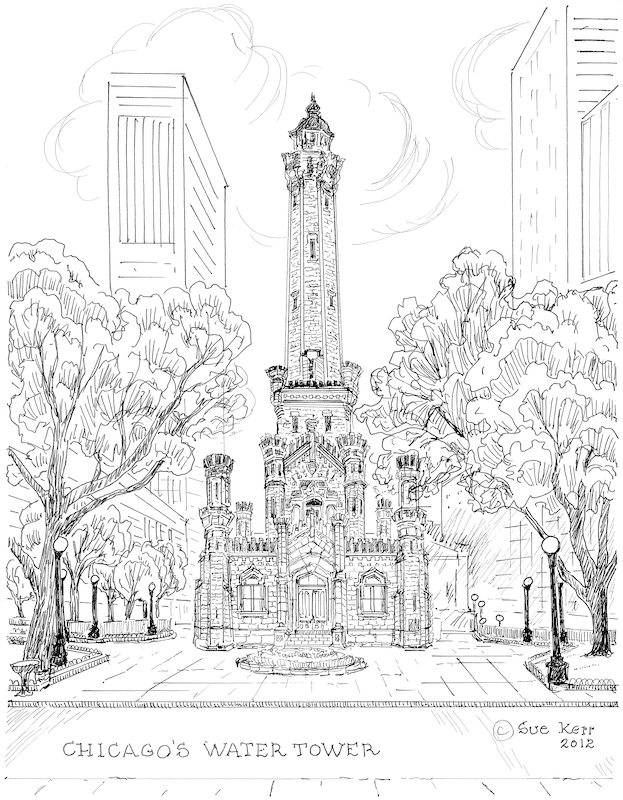
800 N. Michigan Avenue
1869, built
Architect: William W. Boyington
1871, survived the Great Chicago Fire
1962, restored
Also included in the “Historic” gift box
The Chicago “L” (Short for “elevated”)
Rapid Transit system serving the city and the suburbs
1892, first “L”, Chicago and South Side Rapid Transit Railroad: a steam locomotive pulling four wooden coaches carrying a two dozen people from 39th to the Congress Street terminal, 14 minutes
Today, fourth largest heavy rail rapid transit system in U.S.
More than 224 miles of track
Also included in the “Tourist” and the “Theatre” gift boxes

S. Michigan Ave. (100 E) & E. Congress Pkwy. (500 S)
1928 “The Bowman and The Spearman”
Sculptor: Ivan Mestrovic
2004 “Magdalene”
Sculptor: Dessa Kirk
Also included in the “Theatre” gift box

1200 South Lake Shore Drive Chicago
1930, opened
Chicago architectural firm Graham, Anderson, Probst & White
Also included in the “Museum” gift box

“The Mart”
222 W. Merchandise Mart Plaza, Near NOrth Side, junction of Chicago River’s branches
1930, opened, 4,000,000 square feet
Art Deco Style, Architects Graham, Anderson, Probst and White
Built by Marshall Field & Co., later owned more than 50 years by Kennedys
Designed to be a “city within a city”: Centralized Chicago’s wholesale goods business
Late 2000s, leading retail and wholesale destination, hosting 20,000 visitors and tenants per day
Also included in the “Museum” box

5700 S. Lake Shore Dr.
1893 former Palace of the Fine Arts building, World’s Columbian Exposition
1933 reconstructed, opened for Century of Progress Exposition
Architects,: Charles B. Atwood; Graham, Anderson Probst & White; Shaw, Naess & Murphy
Also included in the “Historic” gift box

5700 S. Lake Shore Dr.
1893 former Palace of the Fine Arts building,
World’s Columbian Exposition
1933 reconstructed, opened for
Century of Progress Exposition
Architects,: Charles B. Atwood; Graham, Anderson Probst & White; Shaw, Naess & Murphy
Also included in the “Museum” gift box

600 E. Grand Av. at Lake Michigan
1914, built
Architect Charles Sumner Frost
Employed by the U.S. military during WWI and WWII, housing Red Cross units
Also included in the “Tourist” gift box

55 N. Michigan Ave
Also known as Pritzker Pavilion or Pritzker Music Pavilion
Bandshell in Millennium Park
Architect: Frank Gehry
Classified as a work of art
Designed with large fixed seating area, a Great Lawn, trellis network to support sound system and signature Gehry stainless steel headdress
2004, opened
Home of the Grant Park Symphony Orchestra and Chorus and the Grant Park Music Festival
The nation’s only remaining free outdoor classical music venue
Hosts wide range of music series and annual performing arts events
Also included in the “Theatre” gift box

Lake Shore Drive on Chicago’s Near South Side
1924, Opened
“DEDICATED TO THE MEN AND WOMEN OF THE ARMED FORCES”
Home to the NFL‘s Chicago Bears
Also included in the “Tourist” gift box

1893, built
Architects: Shepley, Rutan, and Coolidge
The Lions of the Art Institute of Chicago
Two bronze lion statues
flanking the Institute’s main entrances
Sculptor Edward Kemeys
1893, created
Also included in the “Museums” gift box

Center of Millennium Park, Michigan Avenue at Randolph
Sculptor Anish Kapoor, called it “Cloud Gate”
2006, dedicated
Also included in the “Tourist” gift box

Intersection of Congress Drive and Michigan Avenue in Grant Park
Bronze equestrian sculpture standing as gatekeeper in Congress Plaza
Croatian sculptor Ivan Meštrović
1928, installed
(Other sculpture, The Spearman. Both sculptures missing weapons, the bow and arrow and the spear)
Also included in the “Theatre” gift box

141 W. Jackson Boulevard
Skyscraper at the foot of the LaSalle Street canyon, in the Loop
1882, construction began at present location after the Chicago fire
1885, opened
Designed by William W. Boyington, best known today for his work on the Water Tower
1925, Chicago Board of Trade (CBOT) commissioned Holabird & Root to design current building
1930, opened
Art deco style
1977, designated Chicago Landmark
1978, added to National Register of Historic Landmarks
Originally built for CBOT
2007, merged CBOT and Chicago Mercantile Exchange
Also included in the “Historic” gift box

78 E. Washington St. and Michigan Avenue
Boston architectural firm Shepley, Rutan and Coolidge
Neoclassical architecture
1897, opened as central library building and meeting hall and memorial for Grand Army of the Republic (GAR)
1977, converted to and arts and culture center
Houses city’s official receptions, Mayor of Chicago welcoming Presidents, royalty, diplomats and community leaders
Chicago Landmark
Also included in the “Theatre” gift box

North State Street, Chicago’s Loop
Originally the Balaban and Katz Chicago Theatre
Oldest surviving grand movie palace
1921, designed by primary architects Cornelius W. Rapp and George L. Rapp
Neo-Baroque French–revival style–oldest surviving example of this style in Chicago
1925 to 1945, dominant movie theatre enterprise
1979 National Register of Historic Places
1983 listed as Chicago Landmark
Distinctive marquee, “an unofficial emblem of the city”
Appears frequently in film, television, artwork, and photography
1986 renovation completed
1994 marquee replaced, retaining look of original
2004 original marquee donated to the Smithsonian Institution
Also included in the “Theatre” gift box

- 209 S. La Salle St. located in Chicago’s Loop
- 1871, after the Great Chicago Fire, building used as an interim City Hall
- “Rookery” nickname alluded to both birds inhabiting exterior and
- shady politicians of former City Hall building on same land
- 1888, opened
- Architectural styles: Queen Anne style architecture, Prairie School
- Façade contains decorative late Roman, Venetian, Moorish and medieval-European elements
- Architects Daniel Burnham, John Wellborn Root
- 1970, added to National Register of Historic Places
- 1972, designated Chicago Landmark
- 1975, named National Historic Landmark
- 1987, featured in the film The Untouchables as police headquarters of Eliot Ness
- Also included in the “Historic” gift box

1400 S. Lake Shore Drive
1921, built
Architect: Daniel P. Burnham
Also included in the “Museum” gift box

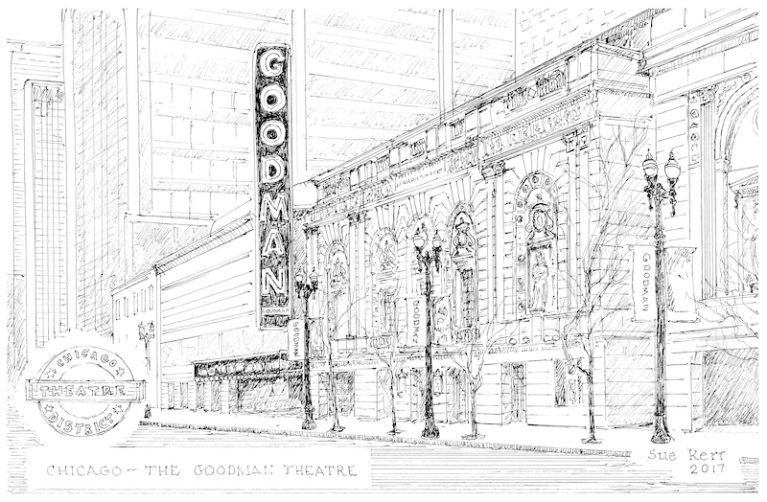
170 N Dearborn St, Chicago’s loop
Professional theater company, major part of Chicago theatre scene
Chicago’s oldest currently active nonprofit theater organization
1925 founded as a tribute to Chicago playwright Kenneth Sawyer Goodman
2000 company moved into the Dearborn building in Chicago’s theater district
Also included in the “Theatre” gift box
875 North Michigan Avenue, Streeterville area of Chicago
100-story, 1,127-foot (344 m) tall skyscraper
Architects Skidmore, Owings and Merrill
Chief designer Bruce Graham, structural engineer Fazlur Khan
1964, development began
1967, interrupted
Engineering problem resolved by Raymond Concrete Pile Co.
1969, completed
One of the most famous buildings of the Structural Expressionist style, the skyscraper’s distinctive X-braced exterior shows that the structure’s skin is part of its ‘tubular system’
Also included in the “Tourist” gift box

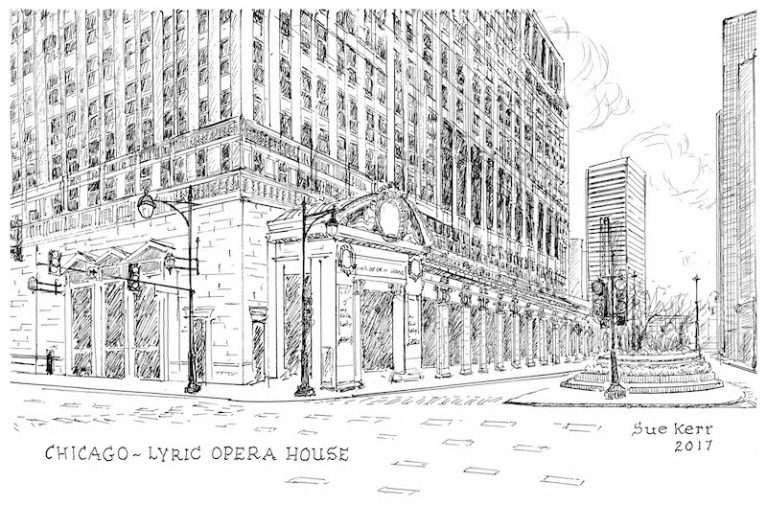
20 N Upper Wacker Drive, in Chicago’s Loop
1929, housed in Civic Opera Building, Art Deco structure
One of the leading U.S. opera companies
1954 founded in Chicago under the name ‘Lyric Theatre of Chicago’
1954 Maria Callas debuted in U.S.
1956 re-organized under its present name
World-famous artists performed, including opera tenor Luciano Pavarotti
Rudolph Nureyev debuting in U.S. at the Lyric
George Balanchine creating choreography for the Lyric
2020, Opera house became new home for Joffrey Ballet
Also included in the “Theatre” box
Marshall Field and Company Building or Macy’s at State Street
Known for its clocks, weighing about 7.5 short tons each
The southwest clock, on State and Washington, known as the Great Clock
1897, installed
Marshall Field envisioned store as a beacon, as a meeting place
Clock installed as southwest corner of store became a popular meeting place
People began leaving notes for one another on the Marshall Field’s windows.
Clock was an attempt to end this practice and encourage punctuality
1978, building declared a National Historic Landmark
Listed on the National Register of Historic Places
2005, designated a Chicago Landmark
Also included in the “Historic” gift box

24 W Randolph, Chicago’s loop
1926, opened
Architects Rapp and Rapp
Decor inspired by Indian architecture
Initially, movies and vaudeville acts
1930s primarily a movie house,
1934, at 12, Judy Garland’s debut appearance–with her sisters–as Frances Gumm
1998, theatre restored and reopened
Listed on the National Register of Historic Places
Also included in the “Theatre” box

50 W Washington
Sculptor Pablo Picasso
1967, dedicated
Also included in the “Tourist” gift box

209 S LaSalle St, Chicago, IL 60604
1886 Architect John Root designed copper-plated ironwork
1907 redesigned by Frank Lloyd Wright,
maximizing amount of light and air in the building,
sheltered by glass ceiling
Also included in the “Historic” gift box

Designated “In an Attitude of Defiance”
1893, bronze statue created for the Art Institute’s opening at current location
Sculptor, Edward Kemeys
(The north lion, “On the Prowl”)
Also included in the “Museum” box

Contains rock fragments from around the world
Architects John Mead Howells and Raymond Hood
1925, completed
Also included in “Historic” gift box

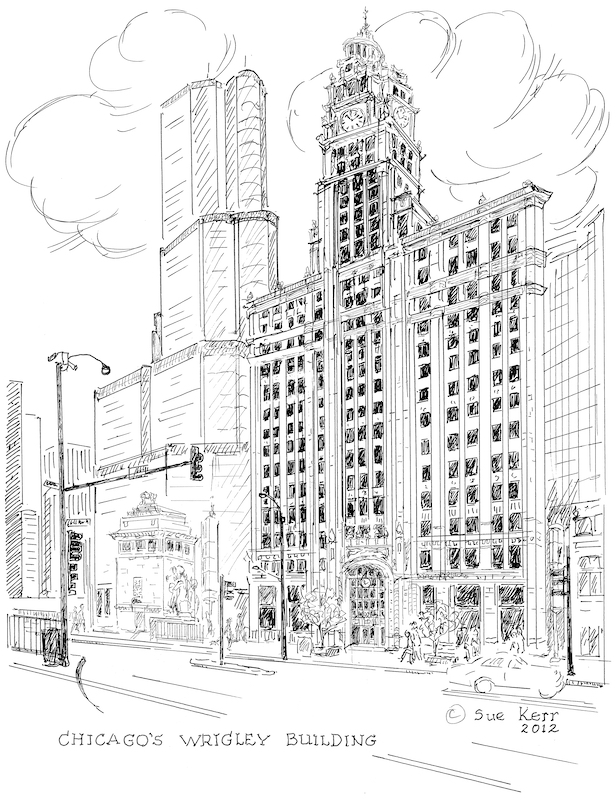
400-410 North Michigan Avenue
1920-21, built
Architectural firm: Graham, Anderson, Probst & White
Also included in the “Historic” gift box
“The Friendly Confines” 1060 West Addison Street
1914, opened Architect: Zachary Taylor Davis
Home of the Chicago Cubs Baseball team
1908 and 2016 World Series Champions
Also included in the “Tourist” box

Northwest section Millennium Park, Historic Michigan Boulevard District of Chicago’s Loop
1917, original peristyle designed by renowned Chicago planner Edward H. Bennett, Daniel Burnham‘s partner in the Plan of Chicago, also known for designing Buckingham Fountain
1953, original, made of concrete, razed
2002, Public park/Town Square, limestone replica of the semicircle of paired Roman Doricstyle columns
Hosts cultural events
Included in the “Museum” gift box
